
a personal viewpoint …
PART ONE
I began Zen practice in 1965. Although I undertook retreats in the early 1970s at Throssel Hole Buddhist Abbey, a Soto Zen centre in Northumberland, and more recently with Thich Nhat Hanh, I have been wary of labels and institutionalised religion. During my sixty years of doing zazen I haven’t been a ‘disciple’ of any particular Zen teacher and I haven’t been a monastic in Japan or here in the UK. Zazen practice itself has been my primary teacher – particularly in the form of shikantaza, (just being here, being aware) following the writings of Dogen. Having come across a translation of the Fukanzazengi, Dogen’s instructions for zazen practice, in 1964-65, I set out to follow his instructions as best I could. I did this alone for about six years, sitting at home or in the woods and common land near our house in the Charnwood Forest area of Leicestershire. Sometimes, in the evenings or at weekends, I would sit for hours in 30-minute periods. And when I worked in the garden or doing other day-today chores, I would try to be meditative, to practice do-zen, that is, meditation-in-action or everyday zen. It wasn’t until I went to Throssel Hole and later met a Japanese Soto Zen monk travelling in the UK, that I had any confirmation that what I had been doing was ‘correct’ zazen.
During those years I often had the feeling that I ought to become a monk, move to Japan, do things properly. But something held me back. I wanted my Zen practice to be firmly located in my daily life – rooted in my day-to-day experience as I studied at art college and went on to a career as artist, writer and academic. It seemed to me that my Zen practice only made sense and had real validity if it stood the test of enhancing the life I was leading. I did my best to learn from other teachers, writers, poets and artists – always assessing what they had to say and show against the lessons I was learning from zazen in my daily life.
Though for many years I felt a sense of inferiority or inauthenticity due to my lack of formal institutionalised training, I gradually began to see that this gave me a fresh perspective on Zen practice as a homegrown unschooled lay person. Since I started in 1965 I have been trying to cultivate a meditation practice and mindful ethics that is free of the orientalism and hierarchical power structures that have often been a feature of Buddhist practice (including Zen) in the West.
My Zen practice has been complemented and enriched by ideas, and approaches to living, learnt from a number of other sources – particularly the strands of sceptical philosophy developed by Pyrrho of Elis, Sextus Empiricus, Spinoza and more recent thinkers such as John Dewey, Gary Snyder and Sulak Sivaraksa. All of these individuals share a view of the world as a place of interdependence, process, transience and uncertainty – a world in which all beings have a vital role to play from the smallest microbe to the largest whale, fungi or tree. Human flourishing is inseparable from the flourishing of all beings and the wellbeing of our planet. These thinkers encourage us to be aware, to be open to many viewpoints, to suspend judgement, to see clearly, to recognise our own assumptions and preconceptions, and to be compassionate and kind to ourselves and to all beings. They advocate ways of living which are grounded in a deep awareness of the miracle of being-here. They all suggest that in order to live peacefully and sustainably, we need to free ourselves from craving, aggression and delusion. In this sense they offer extensions and variations to the dharma advocated by Buddhist and Zen teachers.
In the late 1990s, I met Martine and Stephen Batchelor and gave a couple of talks and ran workshops as part of their programme at Sharpham College. I followed the development of Stephen’s thought over the following years as he formulated the idea of ‘secular Buddhism’ – a term he applied to what he saw as Buddhist practices stripped of ritual, exoticism and supernatural beliefs – a revised and renewed set of practices that were grounded in contemporary science, culture and social context. I began to realise that the approach I had taken all those years ago could now be categorised under this new, awkward and possibly misleading label that is now in quite common usage, namely, ‘secular Buddhism.’
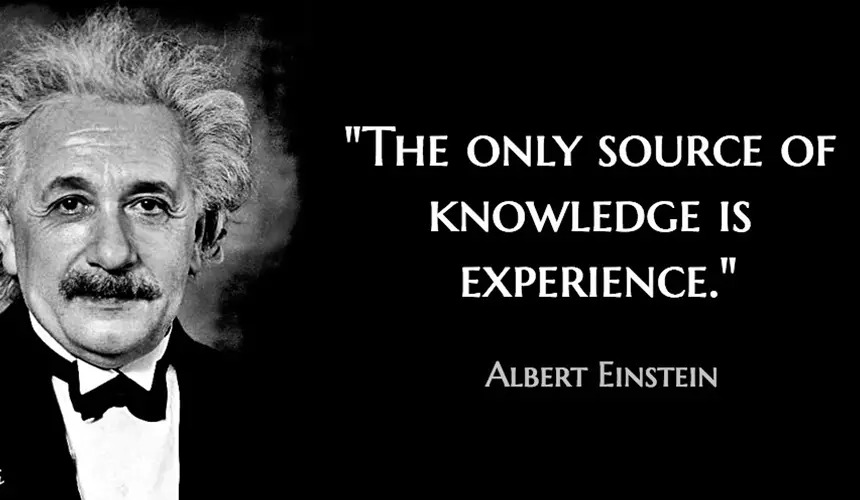
It seems to me that experience is the ultimate teacher – not the Buddha, a Zen master or a charismatic guru. Everything that happens – all our meetings with other humans and encounters with the world – are aspects of our experience. In this way we learn from everyone – and every situation becomes an opportunity for learning and for contemplative enquiry. Zazen, and other forms of mindful meditation, can be seen as a lens or prism through which we can see more clearly everything that arises. The practice of mindful enquiry is also a space in which to learn how to trust our own experience, understanding and judgment. Is this practice beneficial? Am I learning about myself, other people and the ways of the world? Does mindful meditation help me to live better? Am I becoming less burdened by my thoughts, feelings and sensations? Can I step back from my experience – even if it’s just for a moment? These are the sort of questions I ask myself. Sometimes I can answer, ‘yes.’ Sometimes, it is hard to tell. But, for sixty years I have felt it very worthwhile to continue and that seems to me pretty amazing. Looking back, I can’t think of one occasion when I have got up from Zazen feeling worse than when I sat down – sometimes I have felt little change but usually I feel slightly, or very much, calmer, clear and lighter – and that seems to me, after all this time, to be quite remarkable.
So, the practice of Zen over the past sixty years, has been both a stabilising, calming force, and a crucial process of learning and letting go. Daily life Zen – being mindful as much as I can – has been my teacher, along with all those individuals I’ve met who manifest kindness, insight, wisdom, compassion and equanimity – a great many of whom would not call themselves Buddhists and certainly wouldn’t think of themselves as teachers. I have also learnt much from historical figures within the Buddhist tradition, and from thinkers, philosophers, poets, artists and writers who are part of my cultural inheritance, though not part of the history of Buddhism. This, along with the small meditation groups I have participated in over the years, and now the Meditation Circle, is the very diverse and enriching sangha to which I feel lucky to belong.
PART TWO
A couple of important questions need to be raised in relation to my somewhat solitary, wayward and self-taught evolution as a Zen practitioner. First, how do I know I am on the ‘right track’ or ‘dharma road’; and second, what authority do I have to share my experiences or attempt to guide others on their dharma roads? When I ponder on these questions, as I often do, I tend to arrive at similar answers. I feel I am on the right track when the quality of my experience is enhanced by my Zen practice – when I feel ‘better,’ more at peace, able to think, feel and sense more clearly. This test of experience, aligned with seeing how what I experience aligns with, or doesn’t align with, the experiences of others, enables me to feel my way along the path – a path that, after all, only I can walk. No one else can walk it for me. And as to what authority I have, my answer is that I have none – other than the authority of sixty years of Zen practice and my limited ability to share that experience with others. As to the success or failure of these attempts at sharing, I leave others to decide. So long as everyone keeps their wits about them, question what I may say and test what is said against their own experience, I guess I can do little harm. All my writing, poetry, artmaking and podcasting are both forms of meditation, and feeble attempts to share and pass on what I have learnt.
Historically, authority within Zen institutions has been handed down from teacher to teacher (or master to master – they are almost all men) in a process of ‘transmission.’ All Buddhists would probably like to be able to trace the process of realisation from generation to generation back to the Buddha’s own awakening. However, there can be no certainty that contemporary experiences of awakening are the same as those of earlier generations, let alone of the Buddha or his immediate circle of students. Stuart Lachs (2002) and others have pointed out that this process of transmission, central to Zen, but also important to other schools of Buddhism, is a very problematic notion. On many occasions in the history of Zen authority has passed from a teacher to his son; or from a teacher to a student who was seen as a good administrator or someone who will continue, and not question, the codes and values of the institution of Zen, or who will uphold the values of the state. In all these cases transmission, or the passing on of the baton of authority, is not from one ‘enlightened’ master to another, based on the qualities of the individuals concerned, but based on institutional, family or government requirements. In this regard Zen has been, through much of its history, a very conservative institution. Of course, as far as any Zen student is concerned, a teacher only has the immediate authority of her, or his, own presence – that is, their experience, and the capacity they have to cultivate that experience in a student. For most students this direct transformative process is much more important than institutional transmission.
There are many Zen teachers who have seen through, and been critical of, the institutionally driven process of transmission, – recognising that the Zen teaching of their day is lacking in authenticity and who have then set out to revitalise the tradition by searching for teachers who do have the stamp of personal authority rooted in their experience of Zen practice and demonstrated in the way they live their lives. Dogen is a prime example of this. Having been unable to deepen his learning in Japan he felt he had to go to China to seek out a teacher. Eventually, in 1225, in the Tiantong Mountains, he found Rujing – an unusual teacher who had no time for the usual trappings of authority and who believed that simply being present to each moment was at the heart of Buddhist practice. This meeting with Rujing was one of the most important events in Dogen’s life – a truly transformative experience. (Tanahashi 1995)
As a largely self-taught, somewhat reluctant, sceptical Zen practitioner, I have been very aware that I run the risk of wandering into cul-de-sacs and blind alleys, developing ineffective practice and understanding, and becoming too attached to my ‘own’ opinions. Self-deception and hubris are tendencies that I have had to particularly guard against. I long ago learnt that glorying in one’s own knowledge or virtue is just another form of attachment and is a hindrance to learning, growth and realisation. Occasional retreats, being part of a regular sitting group and studying the writings and learnings of others, have provided a critical framework within which I can examine and realise my own understanding. Zen itself, the practice of mindful awareness, maintained over many decades, teaches patience and contemplative stamina. It also erodes any excesses of self-congratulation, pride or misunderstanding as surely as rain and ice erode the sharp features of a boulder.
I firmly believe that experience is our ultimate teacher, and mindful awareness – daily life Zen practice – is a way of enhancing, clarifying and concentrating that experience. Cultivating clear-sighted awareness and presence, combined with compassion and feelings of kinship with other beings, can enable us to cope with the vicissitudes of life. It also contributes, in a small way, (by sharing our experiences), to the ancient Buddhist project of freeing ourselves and others from unnecessary suffering – enabling all beings to grow in wellbeing, understanding and peace.
BIBLIOGRAPHY
Lachs, Stuart. 2002. Richard Baker and the Myth of the Zen Roshi. Online at: http://www.thezensite.com/ZenEssays/CriticalZen/Richard_Baker_and_the_Myth.htm – accessed 17 August 2025.
Tanahashi, K. ed. 1995. Moon in a dewdrop: writings of Zen master Dogen. New York: North Point Press.